


Open an XDF, an A2L, a DAMOS or a WinOLS map list in the browser
A definition file says where the maps of a read are and how to read their values. Chiptune BIN imports the main formats in the browser and applies them to the open read. Here is what is read, what is not, and what you can export.
Free Discovery plan with a ChiptunePRO account. Comparison, checksums, imports and download are part of the Pro plan.
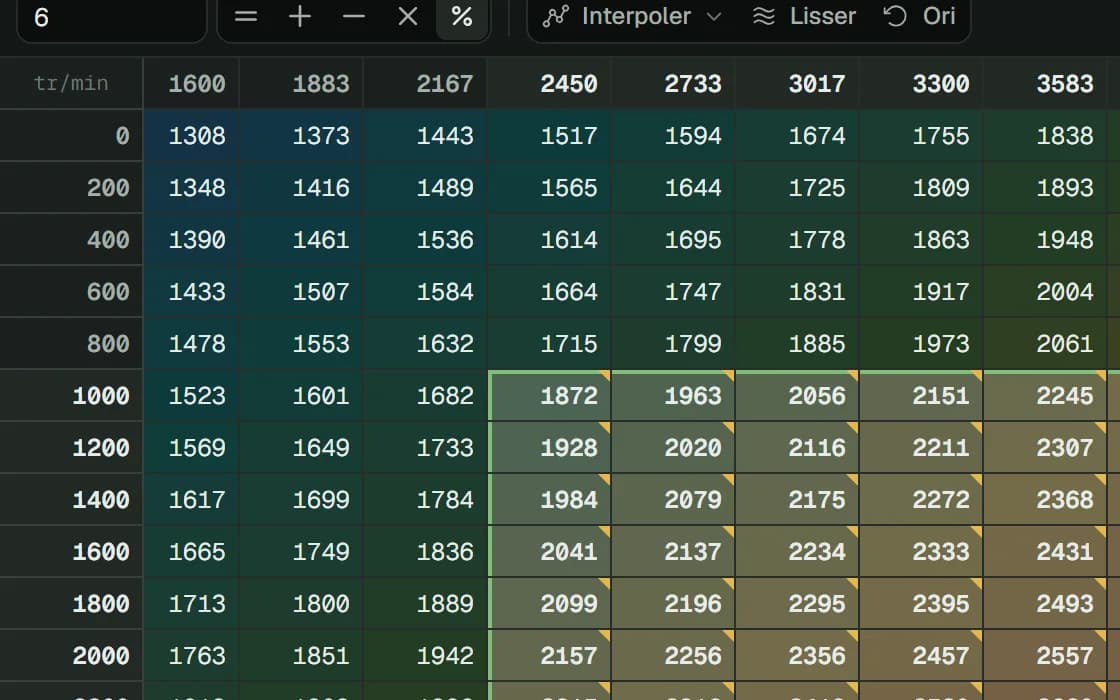
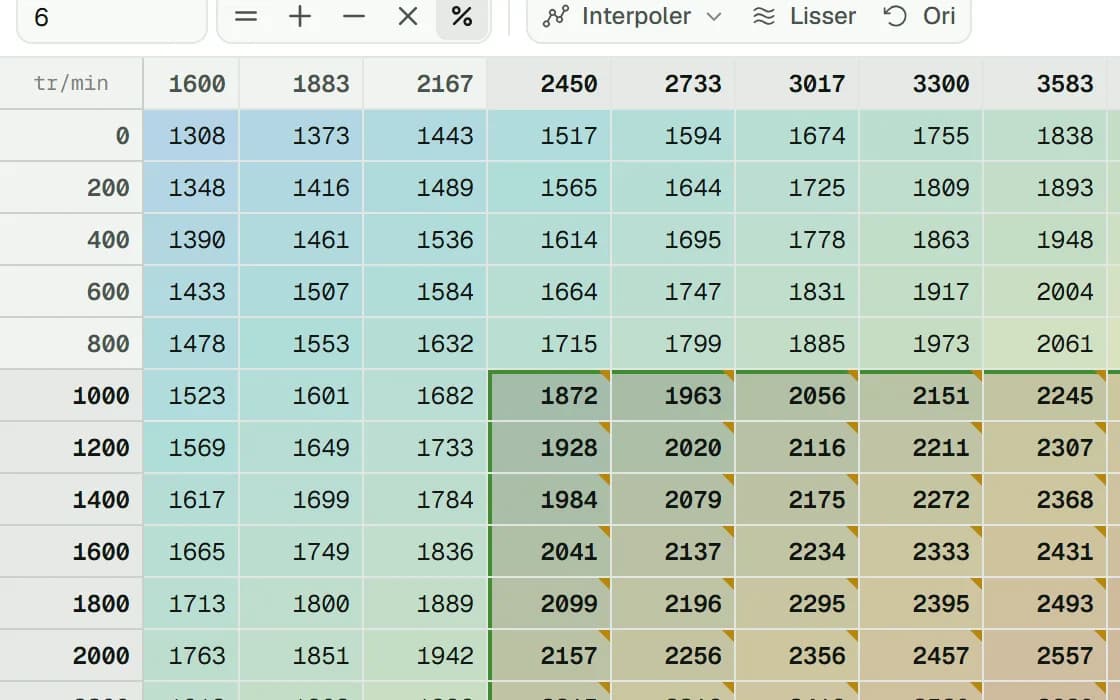
How an import works
Open a remap, then import definitions. The format is recognized from the extension and the file content. Imported maps join the list, sorted into folders when the format has them. A report gives the number of maps added and the warnings.
Definitions describe one specific software. Import them on a read of the same software, then check a few maps before editing.
Imported definitions do not change any byte of the file. They add maps to the list. You can import, check, then delete in bulk the maps that do not match.
XDF (TunerPro)
Versions 1.50 to 1.70. Tables, curves, constants and flags are read, as well as the base offset (BASEOFFSET) in both its forms and linear equations.
A2L (ASAP2)
Chiptune BIN reads calibration objects: CHARACTERISTIC of type VALUE, CURVE, MAP and VAL_BLK, AXIS_PTS, RECORD_LAYOUT, IDENTICAL, LINEAR and linear RAT_FUNC conversions, STD_AXIS, COM_AXIS and FIX_AXIS axes, byte order and EPK. GROUP and FUNCTION become folders.
Measurement blocks (MEASUREMENT, IF_DATA) are skipped. The base address is deduced by matching the A2L against the open read, or entered by you.
DAMOS (.dam)
Files produced by Bosch’s ASAP2DAM tool, for C16x ECUs such as ME7 and EDC15. Values, curves, maps with their own, fixed or shared axes, value blocks and conversions are read.
DAMOS addresses are processor addresses. The base address is deduced by checking the point counts stored in the read, or entered by you.
For a DAMOS or an A2L, you choose how maps are named: “ID - long name” or the identifier only. The original long name stays in the description.
WinOLS
Map list exported by WinOLS as CSV or JSON. .kp map packs in formats 1xx, 2xx, 3xx and 5xx. .ols projects: metadata, ori and map list.
Refused with the reason: .kp 8xx map packs (WinOLS 5.8x and 5.9x), .olsx exports, encrypted versions, compressed map lists.
Other formats
Plain CSV (one map per line, no axes) and Chiptune BIN mappack (JSON). DCM files are refused: they contain values without addresses.
Exporting your definitions
XDF 1.60, read back unchanged by the import. CSV. Chiptune BIN mappack. Map list in WinOLS CSV format and .kp map pack (format 597), to load back into WinOLS.
Limits
- Import and export require the Pro plan.
- Up to 5,000 maps per remap.
- WinOLS files are read strictly: at the slightest offset, the file is refused rather than imported wrongly.
- No reading of protected or encrypted content.
Frequently asked questions
If it describes the same ECU software, yes. Check the first maps: inconsistent values point to a different base offset or software.
No. The import happens in an open remap, because the base address is deduced from the read.
Yes. Name, address, data type, axes and conversion can be changed in each map’s properties.
Yes, as a WinOLS CSV map list or a .kp map pack. In WinOLS, updating the map list from a CSV creates the missing maps.
Yes. Each import adds its maps to the list, up to 5,000 maps per remap. A report gives the number of maps added and the warnings.
Read next
- WinOLS alternativePrice, system, imports, checksums and versions compared with WinOLS, plus what Chiptune BIN does not do.
- Compare two filesOri and mod side by side, reads of different sizes aligned, changed areas outside maps.
- Online checksumsRecognized families, correction rules and signatures: what Chiptune BIN verifies and corrects.
Try it on your own file
Create a ChiptunePRO account, open the editor and drop a read. The Discovery plan is enough to see your maps as hex, tables and curves.